

bookey
app storegoogle play
qr-code

Scan to Download

Home | Last Updated on2026/02/05

Why Zebras Don't Get Ulcers Free Audiobook Download

Robert M. Sapolsky

Understanding Stress and Its Impact on Human Health

4.1813310ratings(GoodReaders reference)

Information

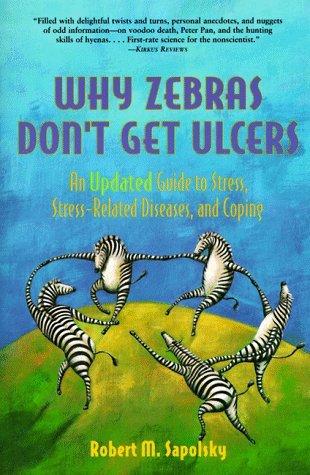
Why Zebras Don't Get Ulcers audiobook cover

Author: Robert M. Sapolsky

Narrator: Brian

Format: MP3

ISBN: 9780716732105

Language: English

Publish Date: 01/01/1993

Audiobook length: 31min

Why Zebras Don't Get Ulcers Audiobook by Chapters

The audio file is large, please allow a moment for loading

Chapter 1: WHY DON'T ZEBRAS GET ULCERS?
playpause
download
00:0041:20
ad
bookey

Download Bookey App to Enjoy Free 5000+ Audiobook

qr-code

Scan to Download

Chapter 2: GLANDS, GOOSEFLESH, AND HORMONES
playpause
download
00:0033:24
Chapter 3: STROKE, HEART ATTACKS, AND VOODOO DEATH
playpause
download
00:0044:41
Chapter 4: STRESS, METABOLISM, AND LIQUIDATING YOUR ASSETS
playpause
download
00:0028:27
Chapter 5: ULCERS, THE RUNS, AND HOT FUDGE SUNDAES
playpause
download
00:0045:38
Chapter 6: DWARFISM AND THE IMPORTANCE OF MOTHERS
playpause
download
00:0061:45
Chapter 7: SEX AND REPRODUCTION
playpause
download
00:0048:55
Chapter 8: IMMUNITY, STRESS, AND DISEASE
playpause
download
00:0093:30
Chapter 9: STRESS AND PAIN
playpause
download
00:0034:34
Chapter 10: STRESS AND MEMORY
playpause
download
00:0052:00
Chapter 11: STRESS AND A GOOD NIGHT'S SLEEP
playpause
download
00:0028:02
Chapter 12: AGING AND DEATH
playpause
download
00:0023:12
Chapter 13: WHY IS PSYCHOLOGICAL STRESS STRESSFUL?
playpause
download
00:0043:16
Chapter 14: STRESS AND DEPRESSION
playpause
download
00:0091:24
Chapter 15: PERSONALITY, TEMPERAMENT, AND THEIR STRESS-RELATED CONSEQUENCES
playpause
download
00:0057:56
Chapter 16: JUNKIES, ADRENALINE JUNKIES, AND PLEASURE
playpause
download
00:0038:56
Chapter 17: THE VIEW FROM THE BOTTOM
playpause
download
00:0072:10
Chapter 18: MANAGING STRESS
playpause
download
00:0039:37

Who should listen Why Zebras Don't Get Ulcers

The summary audiobook of "Why Zebras Don't Get Ulcers" by Robert M. Sapolsky is ideal for anyone interested in understanding the impact of stress on both mental and physical health. It's particularly beneficial for students in psychology or biology, healthcare professionals seeking insights into stress-related illnesses, and general listeners looking to reduce anxiety and improve their well-being. Additionally, it's a valuable resource for those interested in the intersection of science and everyday life, offering practical advice and an engaging exploration of stress from an evolutionary perspective.

3 quotes from Why Zebras Don't Get Ulcers

  • "The stress response is not about being chased by lions; it’s about what you think might happen while you’re sitting safely in an office in a stressful situation."
  • "In an animal’s natural environment, stress is a part of life, but it’s also followed by recovery. In humans, we often create stressors that keep us in a state of prolonged arousal and anxiety."
  • "Chronic stress leads to a host of ailments, both physical and psychological, showing how our responses to stress can ultimately determine our health and well-being."

Author : Robert M. Sapolsky

Robert M. Sapolsky is an esteemed American neuroscientist, biologist, and primatologist known for his groundbreaking research in stress and neurobiology. A professor of biology, neurology, and neurosurgery at Stanford University, Sapolsky's work spans a wide range of topics including the mechanisms of stress, behavior, and evolution. He is also a research associate at the National Museums of Kenya, where he studies primates in the wild, providing unique insights into human and animal behavior. As an accomplished author, Sapolsky has penned several acclaimed books, translating complex scientific concepts into engaging narratives for a broad audience. His ability to blend rigorous scientific inquiry with accessible prose has made him a prominent voice in understanding the biological underpinnings of human behavior.

ad
bookey
Bookey App
5 stars21,717

Free 5000+ Audiobooks,

Book Lovers Must-Have App.

Home | Last Updated on2026/02/05

Why Zebras Don't Get Ulcers Free Audiobook Download

Robert M. Sapolsky

Understanding Stress and Its Impact on Human Health

4.1813310rating

Information

Author: Robert M. Sapolsky

Narrator: Brian

Format: MP3

ISBN: 9780716732105

Language: English

Publish Date: 01/01/1993

AudioBook length: 31 min

Why Zebras Don't Get Ulcers audiobook cover
Loading audio chapters...

Who should listen Why Zebras Don't Get Ulcers

The summary audiobook of "Why Zebras Don't Get Ulcers" by Robert M. Sapolsky is ideal for anyone interested in understanding the impact of stress on both mental and physical health. It's particularly beneficial for students in psychology or biology, healthcare professionals seeking insights into stress-related illnesses, and general listeners looking to reduce anxiety and improve their well-being. Additionally, it's a valuable resource for those interested in the intersection of science and everyday life, offering practical advice and an engaging exploration of stress from an evolutionary perspective.

3 quotes from Why Zebras Don't Get Ulcers

  • "The stress response is not about being chased by lions; it’s about what you think might happen while you’re sitting safely in an office in a stressful situation."
  • "In an animal’s natural environment, stress is a part of life, but it’s also followed by recovery. In humans, we often create stressors that keep us in a state of prolonged arousal and anxiety."
  • "Chronic stress leads to a host of ailments, both physical and psychological, showing how our responses to stress can ultimately determine our health and well-being."

Author: Robert M. Sapolsky

Robert M. Sapolsky is an esteemed American neuroscientist, biologist, and primatologist known for his groundbreaking research in stress and neurobiology. A professor of biology, neurology, and neurosurgery at Stanford University, Sapolsky's work spans a wide range of topics including the mechanisms of stress, behavior, and evolution. He is also a research associate at the National Museums of Kenya, where he studies primates in the wild, providing unique insights into human and animal behavior. As an accomplished author, Sapolsky has penned several acclaimed books, translating complex scientific concepts into engaging narratives for a broad audience. His ability to blend rigorous scientific inquiry with accessible prose has made him a prominent voice in understanding the biological underpinnings of human behavior.