

bookey
app storegoogle play
qr-code

Scan to Download

Home | Last Updated on2026/02/05

The Language Instinct Free Audiobook Download

Steven Pinker

Unraveling the Evolution and Complexity of Human Language

4.0121526ratings(GoodReaders reference)

Information

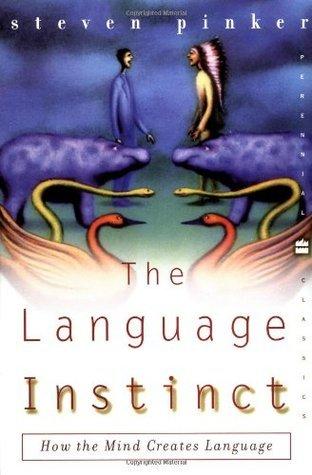
The Language Instinct audiobook cover

Author: Steven Pinker

Narrator: Brian

Format: MP3

ISBN: 9780060958336

Language: English

Publish Date: 01/01/1994

Audiobook length: 31min

The Language Instinct Audiobook by Chapters

The audio file is large, please allow a moment for loading

Chapter 1: 1.
playpause
download
00:0022:39
ad
bookey

Download Bookey App to Enjoy Free 5000+ Audiobook

qr-code

Scan to Download

Chapter 2: 2.
playpause
download
00:0061:51
Chapter 3: 3.
playpause
download
00:0059:08
Chapter 4: 4.
playpause
download
00:0077:22
Chapter 5: 5.
playpause
download
00:0065:14
Chapter 6: 6.
playpause
download
00:0069:34
Chapter 7: 7.
playpause
download
00:0071:49
Chapter 8: 8.
playpause
download
00:0069:56
Chapter 9: 9.
playpause
download
00:0071:22
Chapter 10: 10.
playpause
download
00:0074:08
Chapter 11: 11.
playpause
download
00:0084:24
Chapter 12: 12.
playpause
download
00:0070:30
Chapter 13: 13.
playpause
download
00:00350:23

Who should listen The Language Instinct

"The Language Instinct" summary audiobook by Steven Pinker is ideal for anyone curious about the intricate relationship between language and the human mind. It appeals particularly to students, educators, linguists, cognitive scientists, and psychology enthusiasts who want to explore the idea that language is an innate faculty of the human brain. Additionally, general readers interested in the evolution of language and its impact on culture will find Pinker's insights captivating and accessible, making it an enriching experience for those seeking to deepen their understanding of how we communicate.

3 quotes from The Language Instinct

  • "Language is not an arbitrary collection of sounds and meanings; it is a biologically evolved system that serves a specific purpose in human communication."
  • "We are not just passive recipients of language; we are active creators, using our innate linguistic abilities to construct meaning and understanding in our interactions."
  • "The structure of a language is a reflection of the human mind, revealing how we think and perceive the world around us."

Author : Steven Pinker

Steven Pinker is a distinguished Canadian-American experimental psychologist and cognitive scientist renowned for his contributions to popular science literature. His work delves into the complexities of human nature, exploring its intersections with language, history, morality, and politics. Pinker has authored several influential books, including *The Language Instinct*, *How the Mind Works*, and *Enlightenment Now*, and has written for prestigious publications such as *The New York Times* and *Time*. Born in Montreal and educated at McGill University and Harvard, he has held prominent academic positions at institutions including MIT and Harvard, where he is currently the Johnstone Family Professor of Psychology. A two-time Pulitzer Prize finalist, Pinker was recognized by *Time* magazine as one of the 100 most influential people in the world in 2004. His upcoming book, tentatively titled *Don't Go There: Common Knowledge and the Science of Civility, Hypocrisy, Outrage, and Taboo*, will build on his extensive research in cognitive science.

ad
bookey
Bookey App
5 stars21,717

Free 5000+ Audiobooks,

Book Lovers Must-Have App.

Home | Last Updated on2026/02/05

The Language Instinct Free Audiobook Download

Steven Pinker

Unraveling the Evolution and Complexity of Human Language

4.0121526rating

Information

Author: Steven Pinker

Narrator: Brian

Format: MP3

ISBN: 9780060958336

Language: English

Publish Date: 01/01/1994

AudioBook length: 31 min

The Language Instinct audiobook cover
Loading audio chapters...

Who should listen The Language Instinct

"The Language Instinct" summary audiobook by Steven Pinker is ideal for anyone curious about the intricate relationship between language and the human mind. It appeals particularly to students, educators, linguists, cognitive scientists, and psychology enthusiasts who want to explore the idea that language is an innate faculty of the human brain. Additionally, general readers interested in the evolution of language and its impact on culture will find Pinker's insights captivating and accessible, making it an enriching experience for those seeking to deepen their understanding of how we communicate.

3 quotes from The Language Instinct

  • "Language is not an arbitrary collection of sounds and meanings; it is a biologically evolved system that serves a specific purpose in human communication."
  • "We are not just passive recipients of language; we are active creators, using our innate linguistic abilities to construct meaning and understanding in our interactions."
  • "The structure of a language is a reflection of the human mind, revealing how we think and perceive the world around us."

Author: Steven Pinker

Steven Pinker is a distinguished Canadian-American experimental psychologist and cognitive scientist renowned for his contributions to popular science literature. His work delves into the complexities of human nature, exploring its intersections with language, history, morality, and politics. Pinker has authored several influential books, including *The Language Instinct*, *How the Mind Works*, and *Enlightenment Now*, and has written for prestigious publications such as *The New York Times* and *Time*. Born in Montreal and educated at McGill University and Harvard, he has held prominent academic positions at institutions including MIT and Harvard, where he is currently the Johnstone Family Professor of Psychology. A two-time Pulitzer Prize finalist, Pinker was recognized by *Time* magazine as one of the 100 most influential people in the world in 2004. His upcoming book, tentatively titled *Don't Go There: Common Knowledge and the Science of Civility, Hypocrisy, Outrage, and Taboo*, will build on his extensive research in cognitive science.