

bookey
app storegoogle play
qr-code

Scan to Download

Home | Last Updated on2026/02/05

On the Genealogy of Morals Free Audiobook Download

Friedrich Nietzsche

Exploring the Origins and Values of Morality.

4.1327253ratings(GoodReaders reference)

Information

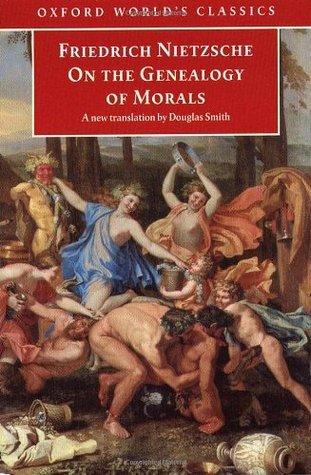
On the Genealogy of Morals audiobook cover

Author: Friedrich Nietzsche

Narrator: Brian

Format: MP3

ISBN: 9780192836175

Language: English

Publish Date: 12/02/1969

Audiobook length: 31min

On the Genealogy of Morals Audiobook by Chapters

The audio file is large, please allow a moment for loading

Chapter 1: ‘Good and Evil’, ‘Good and Bad’
playpause
download
00:0060:24
ad
bookey

Download Bookey App to Enjoy Free 5000+ Audiobook

qr-code

Scan to Download

Chapter 2: ‘Guilt’, ‘Bad Conscience’, and Related Matters
playpause
download
00:0084:53
Chapter 3: What is the Meaning of Ascetic Ideals?
playpause
download
00:00137:56

Who should listen On the Genealogy of Morals

The summary audiobook of "On the Genealogy of Morals" by Friedrich Nietzsche is ideal for philosophy enthusiasts, students, and anyone interested in the evolution of ethical thought and moral concepts. It is particularly beneficial for those seeking a concise overview of Nietzsche's critical examination of traditional moral values, the origins of guilt and asceticism, and the dichotomy between noble and slave morality. Additionally, listeners seeking to understand modern existentialism and its roots will find this summary an engaging and insightful resource to enhance their comprehension of Nietzsche's profound and challenging ideas.

3 quotes from On the Genealogy of Morals

  • "He who fights with monsters should look to it that he himself does not become a monster."
  • "It is not the facts that matter, but the interpretation of them that determines their significance."
  • "Ascetic ideals have been the focal point of all cultural efforts and aspirations, representing a form of will to power."

Author : Friedrich Nietzsche

Friedrich Nietzsche (1844-1900) was a German philosopher, cultural critic, and poet whose provocative ideas challenged the foundations of traditional morality and religion, profoundly influencing modern thought. Often associated with existentialism and postmodernism, Nietzsche is best known for his critique of established values and his exploration of concepts such as the "will to power" and the "Übermensch." His works, including "Thus Spoke Zarathustra" and "Beyond Good and Evil," reveal a complex understanding of human psychology and culture, while his incisive style blends aphorism, poetry, and rigorous philosophical inquiry. Nietzsche's emphasis on the importance of individual perspective and his declaration that "God is dead" exemplify his radical departure from conventional beliefs, making him one of the most significant thinkers in the Western philosophical canon.

ad
bookey
Bookey App
5 stars21,717

Free 5000+ Audiobooks,

Book Lovers Must-Have App.

Home | Last Updated on2026/02/05

On the Genealogy of Morals Free Audiobook Download

Friedrich Nietzsche

Exploring the Origins and Values of Morality.

4.1327253rating

Information

Author: Friedrich Nietzsche

Narrator: Brian

Format: MP3

ISBN: 9780192836175

Language: English

Publish Date: 12/02/1969

AudioBook length: 31 min

On the Genealogy of Morals audiobook cover
Loading audio chapters...

Who should listen On the Genealogy of Morals

The summary audiobook of "On the Genealogy of Morals" by Friedrich Nietzsche is ideal for philosophy enthusiasts, students, and anyone interested in the evolution of ethical thought and moral concepts. It is particularly beneficial for those seeking a concise overview of Nietzsche's critical examination of traditional moral values, the origins of guilt and asceticism, and the dichotomy between noble and slave morality. Additionally, listeners seeking to understand modern existentialism and its roots will find this summary an engaging and insightful resource to enhance their comprehension of Nietzsche's profound and challenging ideas.

3 quotes from On the Genealogy of Morals

  • "He who fights with monsters should look to it that he himself does not become a monster."
  • "It is not the facts that matter, but the interpretation of them that determines their significance."
  • "Ascetic ideals have been the focal point of all cultural efforts and aspirations, representing a form of will to power."

Author: Friedrich Nietzsche

Friedrich Nietzsche (1844-1900) was a German philosopher, cultural critic, and poet whose provocative ideas challenged the foundations of traditional morality and religion, profoundly influencing modern thought. Often associated with existentialism and postmodernism, Nietzsche is best known for his critique of established values and his exploration of concepts such as the "will to power" and the "Übermensch." His works, including "Thus Spoke Zarathustra" and "Beyond Good and Evil," reveal a complex understanding of human psychology and culture, while his incisive style blends aphorism, poetry, and rigorous philosophical inquiry. Nietzsche's emphasis on the importance of individual perspective and his declaration that "God is dead" exemplify his radical departure from conventional beliefs, making him one of the most significant thinkers in the Western philosophical canon.